


Here is a question you probably haven’t been asked yet.
When you open your iPhone later this year, which AI do you want running it? Not, which apps do you want? Not which settings. Which AI model, whether Claude, Gemini, ChatGPT, or Grok, do you want thinking on your behalf?
That question is coming. And the fact that it’s coming tells you everything about where this industry is heading.
The Era of BYOM
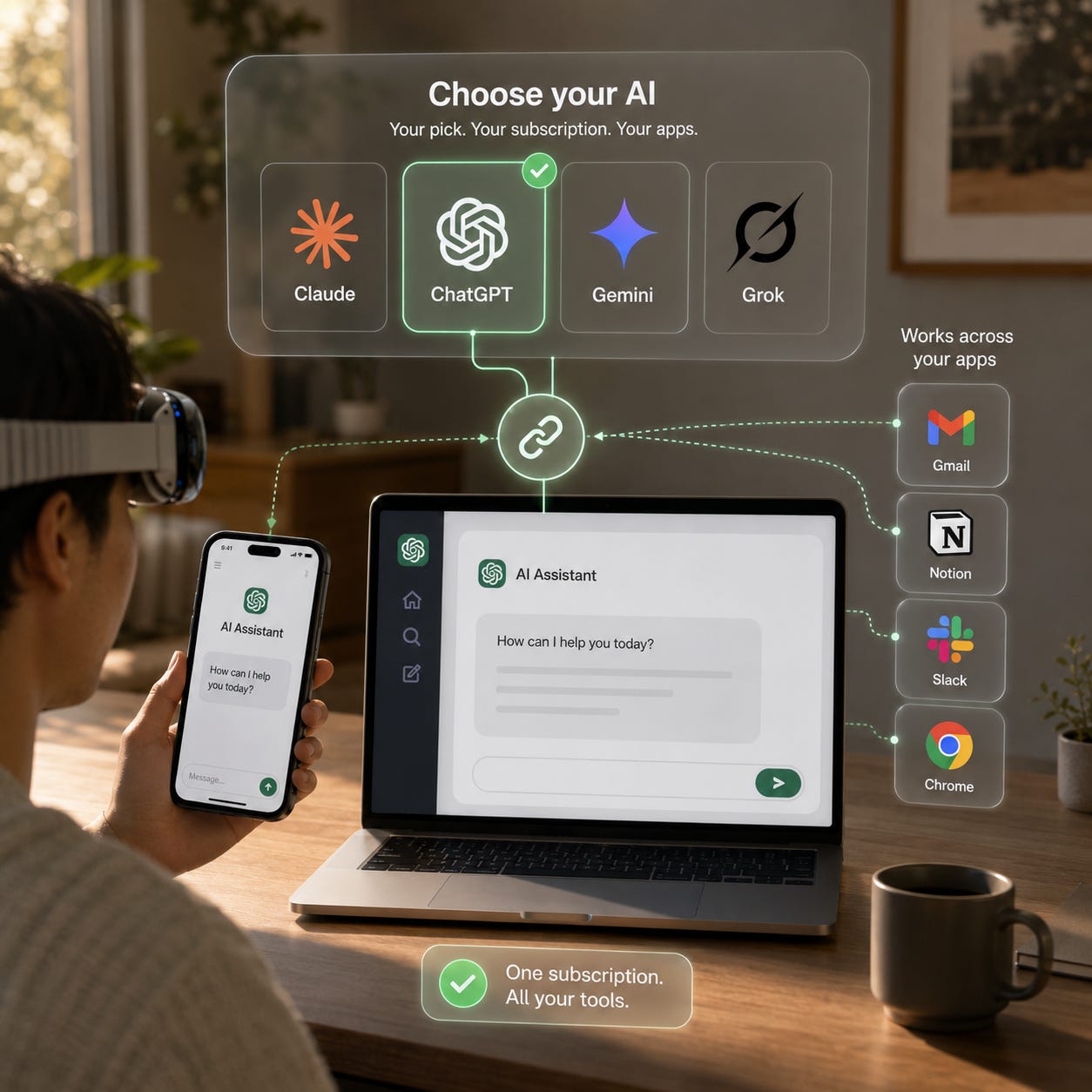
There is a new acronym quietly spreading across the technology industry: BYOM - Bring Your Own Model.
The idea is simple. Instead of a product locking you into one AI provider, the product becomes a neutral platform, and you choose which AI engine powers it. You bring your preferred model. The product does the rest.
Until recently, this was mostly an enterprise conversation. Platform tools like UiPath (automation), Cribl (data observability), and Egnyte (content management) began offering BYOM for their corporate clients, giving regulated industries such as finance, healthcare, and government the flexibility to use AI without violating their data sovereignty or compliance requirements.
But something has shifted. BYOM is no longer just an enterprise feature. It is moving into the consumer products that hundreds of millions of people use every single day.
Apple: “Extensions”
In a May 2026 Bloomberg report, Mark Gurman, the most reliable Apple reporter in the business, broke a story that should have made much bigger waves.
Apple is planning a feature internally called Extensions for iOS 27, iPadOS 27, and macOS 27. The feature will allow users to choose third-party AI models to power Apple Intelligence features, namely Siri, Writing Tools, and Image Playground, directly from installed apps on their devices. Google Gemini and Anthropic’s Claude are already being tested. ChatGPT, which is the current default third-party model, is expected to remain an option.
The public release is expected with iOS 27 in September 2026.
Read that again slowly. Your iPhone, the most closed consumer technology platform ever built, is about to let you choose your own AI brain.
This is not small. Apple has over 1.5 billion active iPhone users. The moment iOS 27 ships with AI model choice, BYOM becomes a mainstream concept overnight.
Why is Apple doing this? Because Siri has fallen embarrassingly behind. Apple has been open about it, rebuilding Siri from scratch, partnering with Anthropic to power Claude inside Xcode for developers, confirming continued OpenAI integration for iOS 26, and entering a formal multi-year partnership with Google to explore Gemini for future Siri capabilities.
Apple’s bet is becoming clear: own the platform, the hardware, and the privacy layer; and let the best AI model win on your device. That is a fundamentally different strategy from where they started.
WordPress: Already Shipped
While Apple’s BYOM moment is still coming, WordPress didn’t wait.
WordPress 7.0 ships on May 20, 2026, this week, and buried in the headline features is something genuinely significant.
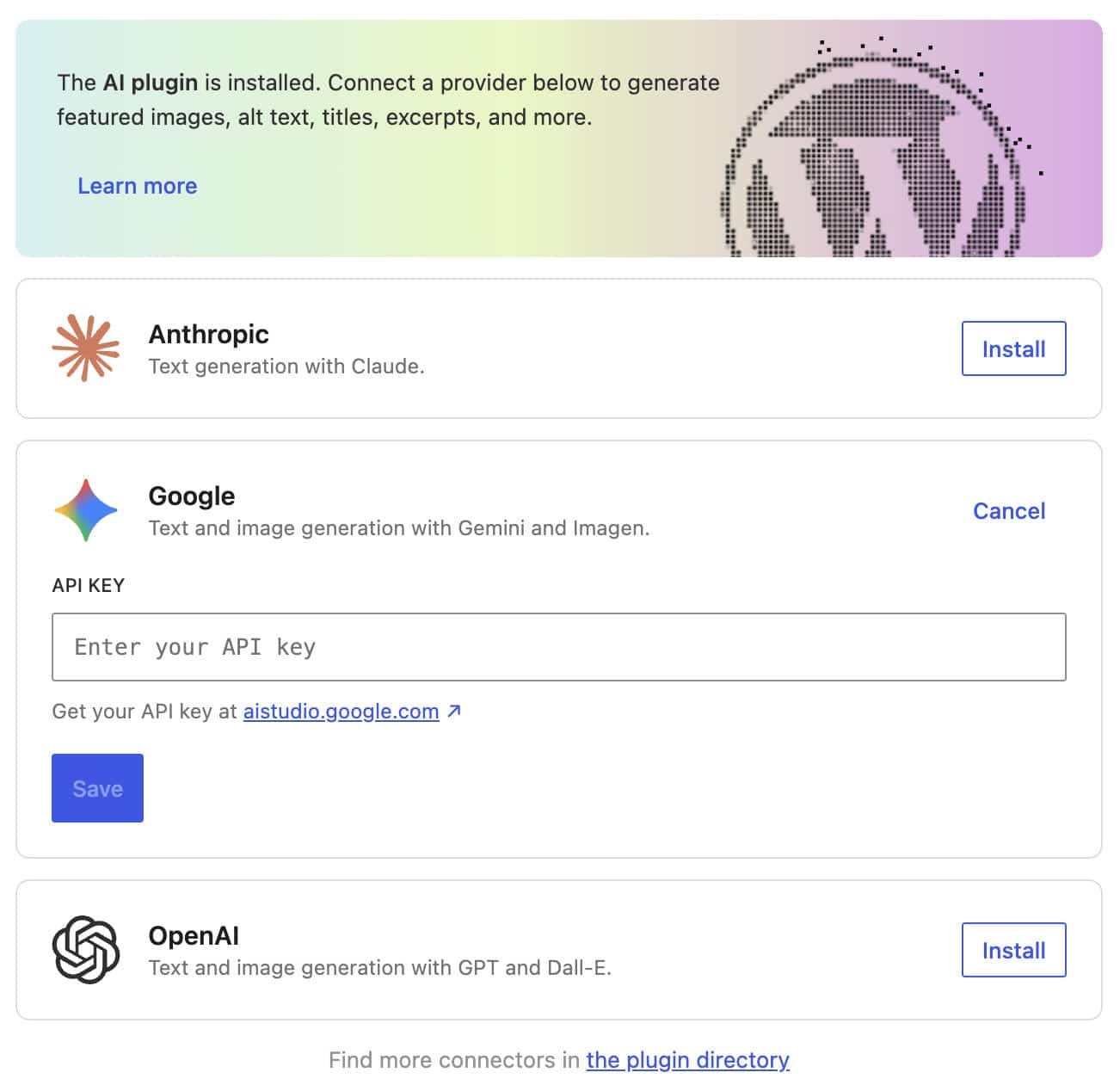
WordPress 7.0 ships with a built-in AI Connectors system. Under Settings → Connectors, site owners can now configure their preferred AI provider, with OpenAI, Anthropic, and Google built in as defaults, so that every AI-powered plugin on their site automatically uses that connection. No separate API keys per plugin. No rebuilding integrations. One choice. Everything flows from it.
The default three providers are OpenAI (ChatGPT), Anthropic (Claude), and Google (Gemini). But the system is open. Community plugins already extend it to include xAI’s Grok, Mistral, Meta’s Llama via Ollama (which runs locally on your server with no external API calls), and OpenRouter, a gateway that routes to 400+ models from a single key.
WordPress powers 42.6% of the web, roughly 605 million websites. This is the first major content management system to ship AI model choice as core infrastructure, not a plugin afterthought. That means the majority of internet users encounter a WordPress-powered site daily, whether they know it or not.
What This Actually Means
Anthropic, OpenAI, Google DeepMind, and xAI have been racing to build the best model. That race continues. But a second race has quietly started alongside it.
The race to become the platform that holds the model.
Apple, WordPress, Microsoft (Copilot Studio now supports Grok, Claude, and Gemini through BYOM), and Azure are all making the same bet: the interface that the user trusts is more valuable long-term than the model that runs behind it. They are building neutral pipes and letting the AI companies compete for the slot.
This has two consequences that matter to you directly.
For users, it means the AI relationship becomes personal. You will develop preferences, maybe Claude for writing, Gemini for research, or Grok for real-time news, and the products you use will accommodate those preferences. AI fluency will stop meaning “knowing how to prompt ChatGPT” and start meaning knowing which model to reach for, and when.
For professionals, it accelerates the fluency gap. The professionals who understand the differences between models, know which one performs better for their specific workflow, and can configure and switch between them will have an edge over those who are still figuring out what a prompt is. BYOM raises the literacy floor, again.
Two Things I Want to See Next
Apple and WordPress have made their moves. Good. But if BYOM is going to deliver on its actual promise of choice without friction, there are two things I am watching for, and frankly asking for, from the broader industry.
1: Notion, Canva, Slack, Spark, and the rest of the productivity stack need to get here faster.
Think about where most professionals actually spend their working hours. Not in a browser, not in a CMS, not on their iPhone settings screen. They are in Notion building docs, in Canva designing decks, in Slack running their communication, in Spark managing email, in Linear tracking tasks, and in Loom recording walkthroughs.
Every single one of these tools has already embedded AI — usually one model, from one provider, on their terms. You get what they give you.
That is not good enough anymore. Not when WordPress has demonstrated that a single, clean Connectors interface can solve this in one settings screen. Not when Apple is proving that even the most locked-down consumer platform in the world can make room for model choice.
If I am a daily Notion user who trusts Claude for how it handles long-form thinking, I should not have to abandon my preferred model the moment I open the Notion AI panel. If I am a designer in Canva who works better with Gemini’s visual reasoning, that should be my choice to make, not Canva’s. If Spark wants to help me write emails, it should ask me which brain I want it to use.
The productivity layer is where BYOM matters most, because it is where professionals spend the most time. The question for Notion, Canva, Slack, Spark, and every comparable tool is not whether to adopt this model. It is how long they think they can resist before users start choosing tools that do.
2: AI companies need to build credit-sharing for connected services.
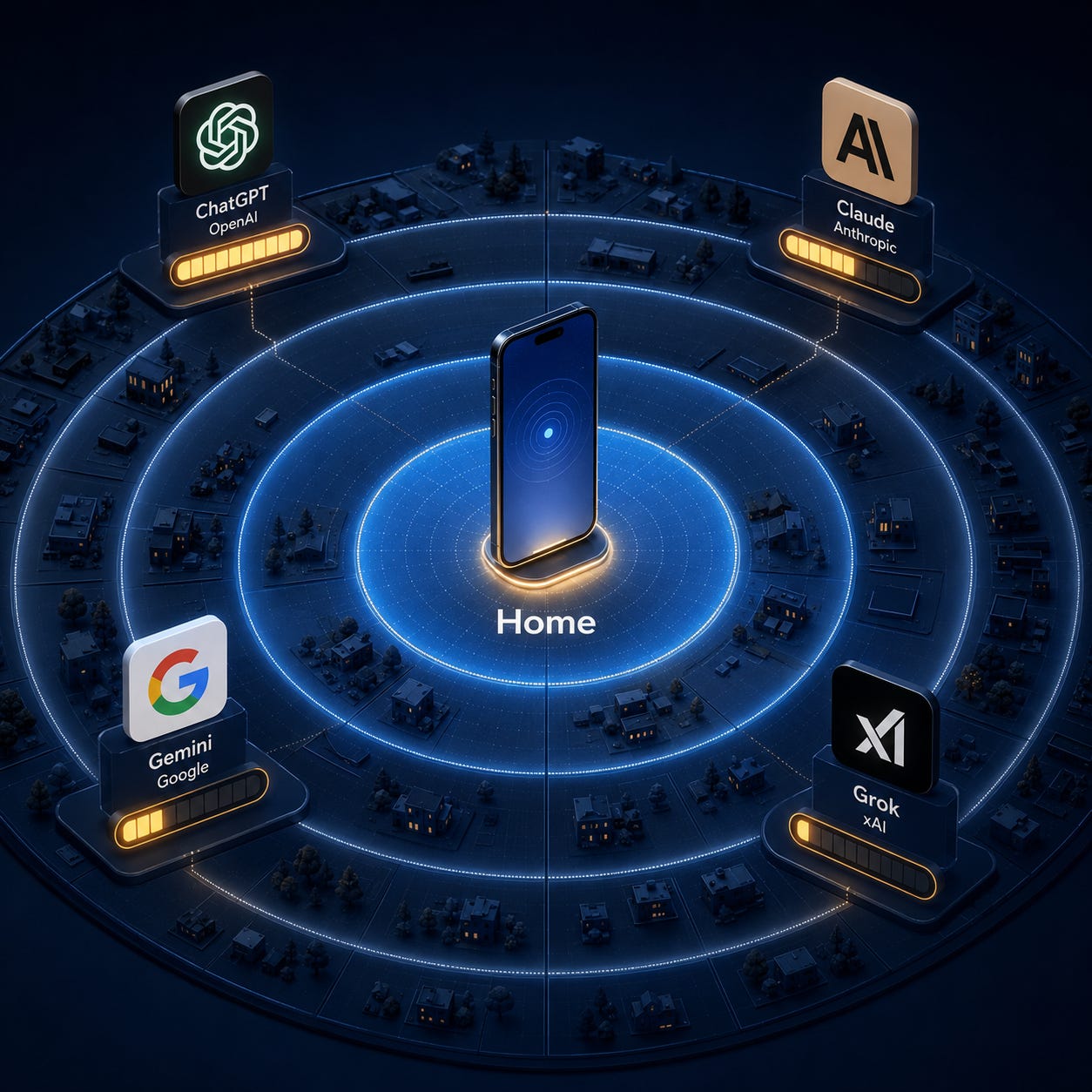
Here is the friction nobody is talking about yet, but every power user is about to run into.
BYOM sounds great in principle. You bring Claude. You connect it to Notion. You connect it to Canva. You connect it to Spark. You run tasks across all of them through the same model. Seamless, right?
Except here is what actually happens. Every tool that routes a task through your AI model draws from your credits, your Claude Pro subscription, your API token balance, and your OpenAI usage quota. Three connected apps running simultaneous AI tasks against a single account means three separate draws on the same pool, often with no visibility into which integration consumed what, and no coordinated throttling to keep you from burning through your monthly allocation before the third week of the month.
This is the credit fragmentation problem. And it is coming.
What I want to see, and what would actually make BYOM work the way it is supposed to, is a linked services credit model. The AI providers are in the best position to build this. The concept is simple: when a user connects their Claude account to a certified BYOM integration, whether Notion, Canva, Slack, Spark, or others, the API calls made through those certified channels consume credits at a reduced rate, or from a separate pooled allocation that does not eat into the user’s primary balance.
Think of it like roaming on a phone network. Your base plan covers your primary usage. Certified partner apps operate under a defined, discounted arrangement. You can see exactly what each one is consuming. And the overall cost reflects the reality that background tasks in connected apps are not the same as direct, high-context conversation sessions.
Until this exists, BYOM at scale is going to hit a wall. Users will either go over quota constantly, start rationing which apps they actually connect to, or abandon the model entirely and go back to whatever AI is baked into each product by default.
The infrastructure for choice is being built. The infrastructure for sustainable, cross-platform usage still needs to catch up.
My Take
There is a pattern here worth noticing.
First came the apps. Then came the platforms. Now comes the models, and the interesting thing is, even the models are being abstracted away.
We went from “which app do you use?” to “which platform do you live on?” to “which AI model do you trust?” And now, BYOM is pushing us toward the next question: not which model, but which interface lets you bring the model you already trust?
That’s the real inflection point. When every major platform offers every major model, the model stops being the differentiator. The workflow, the interface, and the professional fluency to navigate both; that’s what separates the people who get value from AI from the people who are just watching it.
The iPhone is about to ask you which AI you want.
Do you have an answer ready?